
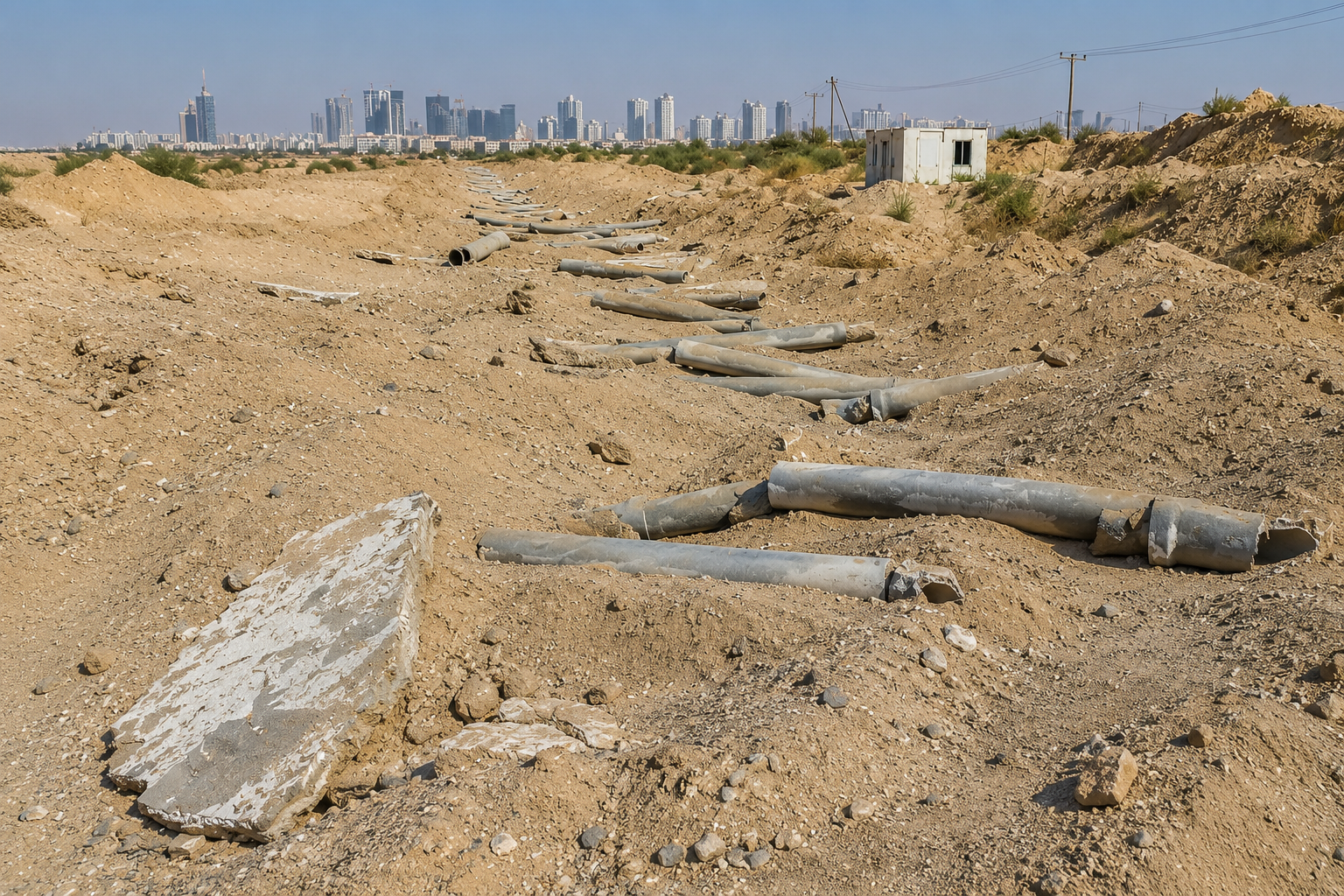
Dubai continues to experience significant growth, with older industrial facilities, commercial developments, infrastructure assets and residential communities being redeveloped to meet the Emirate's future needs. While redevelopment creates exciting opportunities, it also presents environmental challenges that must be understood before construction begins.
One of the most significant—and often overlooked—issues is asbestos contamination.
Historically, asbestos was widely used throughout the UAE in roofing materials, wall cladding, pipework, insulation products, floor tiles, gaskets, cement products and underground services. During demolition, refurbishment or excavation works, these materials can become damaged, resulting in contamination of surrounding soils and creating potentially significant environmental and health risks.
An Environmental Site Assessment (ESA) provides developers, consultants and regulators with the information needed to identify these risks before redevelopment begins.
What is an Environmental Site Assessment (ESA)?
An Environmental Site Assessment (ESA) is a structured environmental investigation undertaken to identify existing or potential contamination that could affect human health, the environment or the proposed future use of a site.
Within Dubai, ESAs are undertaken in accordance with Dubai Municipality Technical Guideline No. 5 – Environmental Site Assessment and Restoration of Contaminated Site, under the oversight of the Dubai Environment and Climate Change Authority (DECCA). The guideline establishes the requirements for investigating contaminated land, assessing environmental risks and developing appropriate remediation strategies prior to redevelopment.
An ESA is not simply a contaminated land investigation—it is a comprehensive assessment designed to determine whether environmental constraints exist and, if so, how they should be managed.
When is an Environmental Site Assessment Required?
An ESA may be required for a wide variety of projects, including:
Residential redevelopment of former industrial or commercial land.
Demolition and redevelopment of existing buildings.
Brownfield land redevelopment.
Infrastructure projects involving significant excavation.
Industrial site closure.
Property acquisition and environmental due diligence.
Planning and regulatory approvals.
Sites where contamination has previously been identified during Environmental Impact Assessments (EIAs).
In many cases, the requirement for an ESA arises after a Phase I Environmental Site Assessment or Environmental Impact Assessment identifies the potential presence of contamination requiring intrusive investigation.
Why Asbestos is a Major Environmental Concern
Unlike many contaminants that are invisible, asbestos often remains within the built environment long after buildings have reached the end of their operational life.
Common asbestos-containing materials (ACMs) encountered during redevelopment include:
Asbestos cement roofing sheets
Asbestos cement wall cladding
Underground asbestos cement pipework
Floor tiles and adhesives
Thermal insulation materials
Gaskets and packing materials
Pipe insulation
Sprayed coatings
Cement debris buried within made ground
During demolition or excavation, these materials can become fragmented and contaminate surrounding soils.
This creates two separate issues:
Residual asbestos-containing materials (ACMs) requiring controlled removal.
Asbestos-contaminated soils requiring environmental remediation before the land is suitable for redevelopment.
For residential developments in particular, asbestos contamination represents a significant environmental constraint that must be addressed before construction proceeds.
How is an Asbestos Environmental Site Assessment Conducted?
The asbestos component of a Phase II ESA is very different from a standard asbestos survey.
Rather than simply identifying asbestos within buildings, the investigation seeks to determine whether historical asbestos materials have resulted in contamination of the surrounding environment.
A typical asbestos ESA includes:
Desktop Review
Previous Environmental Impact Assessments
Historical site information
Existing asbestos surveys
Historical aerial imagery
Site history
Site Investigation
Inspection of remaining buildings
Inspection of demolition debris
Inspection of disturbed ground
Identification of exposed asbestos-containing materials
Inspection of excavation areas
Identification of buried asbestos cement pipework
Bulk Sampling
Representative samples of suspected asbestos-containing materials are collected and analysed by accredited laboratories to confirm the presence or absence of asbestos.
Surface Soil Investigation
Targeted soil samples are collected from areas where asbestos contamination is considered most likely, including:
Areas surrounding asbestos cement debris.
Former building footprints.
Excavation trenches.
Areas where asbestos cement pipework has been disturbed.
Where required, deeper intrusive investigations may also be undertaken to establish the extent of contamination.
More Than Just an Asbestos Survey
One of the biggest misconceptions is that an asbestos survey alone is sufficient.
It isn't.
An asbestos survey identifies asbestos within buildings and structures. An Environmental Site Assessment goes much further by evaluating:
The presence of asbestos contamination within soils.
Potential contaminant pathways.
Risks to construction workers.
Risks to future occupants.
Environmental impacts.
Remediation requirements.
Site suitability for future land use.
These are fundamentally different objectives.
The Importance of Competent Consultants
Environmental Site Assessments involving asbestos should only be undertaken by suitably qualified and experienced specialists.
The asbestos survey, asbestos risk assessment and environmental investigation should be completed by consultants holding recognised professional asbestos qualifications, such as the British Occupational Hygiene Society (BOHS) asbestos certifications, together with appropriate experience in contaminated land investigations and environmental site assessments.
Where asbestos removal is required, works should be undertaken by a competent Asbestos Removal Contractor (ARC) under the independent supervision of a suitably qualified and registered Asbestos Supervising Consultant (ASC). Independent supervision helps ensure that removal works are completed safely, in accordance with the approved methodology, and to recognised international best practice. The ASC should also undertake independent auditing, airborne fibre monitoring and final validation of the completed remediation works.
Developing an Effective Remediation Strategy
If asbestos contamination is identified, the ESA should include a practical remediation strategy.
A typical asbestos remediation programme includes:
Controlled removal of residual asbestos-containing materials.
Excavation of asbestos-contaminated surface soils.
Management of asbestos waste.
Airborne asbestos fibre monitoring during remediation.
Independent supervision of the removal works.
Validation sampling following remediation.
Preparation of a remediation completion report.
The objective is to remove identified asbestos materials and associated contamination so far as is reasonably practicable, demonstrating that the site is suitable for its intended future use.
Reporting Requirements
Dubai Municipality Technical Guideline No. 5 sets out the minimum reporting requirements for an Environmental Site Assessment. A compliant report should typically include:
Executive Summary
Site history
Environmental setting
Scope of investigation
Methodology
Sampling strategy
Laboratory analytical results
Identification of Recognised Environmental Conditions (RECs)
Evaluation of affected media
Environmental risk assessment
Remediation strategy
Validation requirements
Supporting figures, site plans and laboratory certificates
The report should provide a clear audit trail demonstrating how the investigation was undertaken, what contamination was identified and how the identified environmental risks can be effectively managed.
Choosing the Right Environmental Consultant in Dubai
Environmental Site Assessments are far more than a regulatory exercise—they are a critical risk management tool that protects developers, contractors, future occupants and the environment.
Selecting a consultancy with expertise in both contaminated land assessment and asbestos management is essential. A consultant who understands the interaction between asbestos-containing materials, environmental contamination and redevelopment can provide a proportionate investigation, practical remediation strategy and clear pathway to regulatory compliance.
Whether your project involves demolition, brownfield redevelopment, infrastructure works or residential development, investing in a properly scoped Environmental Site Assessment at the outset can significantly reduce programme delays, minimise unforeseen remediation costs and provide confidence that the site is suitable for its intended future use.
Need an Environmental Site Assessment in Dubai?
Anthesis provides Environmental Site Assessments (Phase I, Phase II and Phase III), asbestos surveys, asbestos contamination assessments, soil sampling, remediation strategies, independent asbestos supervision, airborne fibre monitoring and validation services throughout Dubai and the wider UAE.
Our consultants combine internationally recognised asbestos qualifications with extensive experience delivering Environmental Site Assessments in accordance with Dubai Municipality Technical Guideline No. 5, supporting developers, contractors, asset owners and government organisations through every stage of the redevelopment process.
Charles Faulkner (Head of Environment, Health and Safety, and Asbestos Team Leader)
Phone: +971 (0) 50 5541 320
Email: asbestos@anthesisgroup.com